Wireless Handheld Color Ultrasound Probe: Where It Is Used and How to Choose a Source Manufacturer
- 2026-11-06
- 538
- Guangzhou Sonostar Technologies Co., Limited
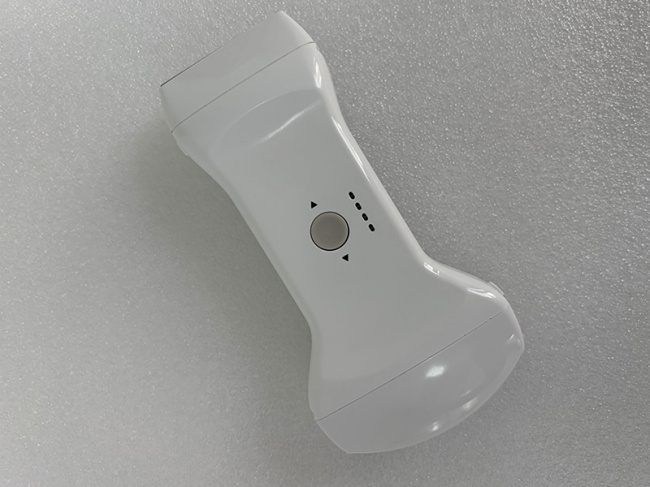
A wireless handheld color ultrasound probe is defined as a transducer with the beamformer, battery and wireless link built into the probe body. No console, no cable, no trolley — the image streams to a phone, tablet or PC. That is the whole reason the device has moved past the radiology department into ambulances, dialysis units, village clinics, veterinary practices and private-label catalogs. Two questions come up every time a distributor or department head evaluates one: which industries it actually fits, and how to tell a source manufacturer from a company that relabels someone else's probe.
What the device is — and what it is not
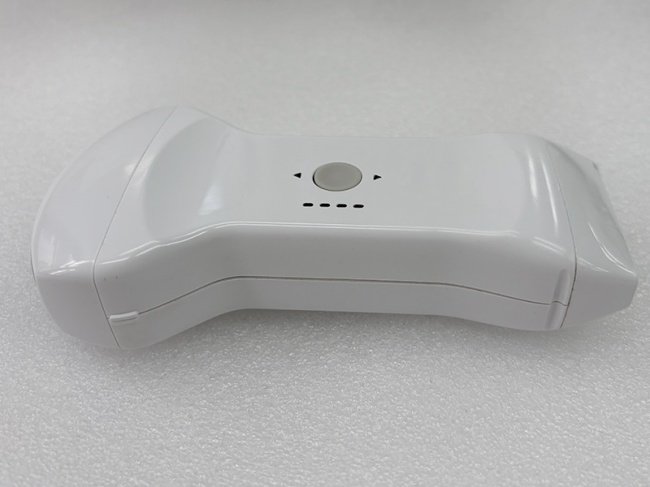
Inside one probe: the transducer array, a beamformer, a 2.200 mAh-class battery and a 2.4/5 GHz Wi-Fi module. Software runs on iOS, Android or Windows. The 3D convex model measures 86 × 61 × 115 mm and weighs 325 g; wearable versions go down to roughly 45 g.
SonoStar (Guangzhou SonoStar Information Technology Co., Ltd.), founded in 2011. builds 2D, 3D and 4D probes across convex, linear, ultra-high-frequency linear, phased array, T-shaped biplane, dual-head, finger-tip and 3-in-1 triple-head formats, and exports to more than 100 countries.
The limit matters as much as the specification. This is a guidance and screening tool — where is the needle, is there fluid here, is this fistula patent — not a replacement for a cart system when a tertiary center has to complete a full abdominal or fetal anatomy workup. Suppliers who say so usually also tell you which channel count and frequency band you actually need.
Six industries where it earns its place
1. Hospital point-of-care. Anesthesiologists use it for nerve blocks and vascular access under direct vision; the ICU for pleural fluid, bladder volume and central lines; the emergency department for FAST scans; nephrology for arteriovenous fistula puncture. Haidian Hospital's nephrology department was among the first in China to run wireless handheld ultrasound-guided fistula puncture, and the vascular surgery team at Peking University First Hospital completed China's first wireless portable ultrasound-guided endovascular treatment of a dialysis access. PICC teams at Jiangsu Province Hospital and Xiangxi Tumor Hospital use the same approach for difficult cannulation.
2. Primary care and rural clinics. In a 2017 program supported by the Sanming health commission, a village clinic in Yan'guan, Fujian, ran a handheld probe for eight weeks and used it to triage abdominal, obstetric and vascular cases that would otherwise have been referred to a county hospital.
3. Prehospital, military and field medicine. No mains power, no trolley, gloves on and one hand free — you swap the battery instead of hunting for an outlet. The same logic applies to disaster response and mobile clinics.
4. Veterinary practice. Convex for abdominal and pregnancy checks, linear and ultra-high-frequency linear for tendons, joints and small structures. A farm call no longer needs a generator and a second pair of hands.
5. Aesthetic and private clinics. Injection guidance is the practical use: mapping the facial artery takes ten seconds, and the probe is small enough not to alarm the patient.
6. OEM brands, distributors and integrators. This is where the sourcing question bites hardest. A factory that owns the tooling can print your logo on housing, label, manual and packaging with no minimum order, tint the housing, and license an SDK — a free base version, a paid customized one — so your own software can drive the probe.
Match the probe to the exam
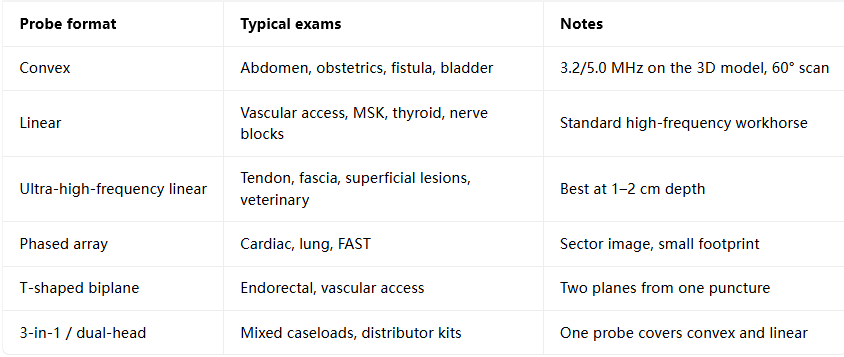
A "3-in-1" is not automatically cheaper than two separate probes. Check whether switching heads costs you image quality on the channel you use most.
How to choose a source manufacturer: seven checks
1. Does the factory make the transducer itself? The transducer is the product. If a supplier buys finished probes and prints a logo, spare probes, firmware fixes and custom frequencies all route through a third party. Ask to see the probe assembly line, and check the channel count on the spec sheet — 64-channel models are a different class from 32-channel ones.
2. Ask for the registration file by market, not a brochure. NMPA for China, CE for Europe, FDA for the US, with ISO 13485 and MDSAP as the quality-system backbone. Selling into Japan, Korea, Russia, Brazil, Australia or Canada means asking specifically whether MFDS, RZN, ANVISA, TGA or Health Canada registration is already held.
3. Get raw images of the model you are buying. Brochures use the best frame from the best patient. Request a cine loop on a tissue-equivalent phantom, and a live session where the vendor scans while you watch. Resolution, penetration and color flow at depth are what you are actually paying for.
4. Check serviceability before price. Is the battery user-replaceable? Can one probe be repaired without scrapping the kit? What is the warranty period, and who pays freight? A cheap probe with a sealed battery and no spares policy gets expensive by year two.
5. Confirm the OEM threshold in writing. Logo printing with no minimum order, housing color at tooling cost, custom enclosure or PCB layout only at volume with mold and board fees stated up front. Put the SDK terms — free tier versus customized — in the same document.
6. Ask for a verifiable clinical record. Named hospital adoptions and procedure firsts can be checked; "used by many hospitals" cannot. SonoStar's record includes the dialysis-access and PICC programs above, plus a pericardial effusion drainage in a 79-year-old high-risk patient at Xianyang First People's Hospital.
7. Test the supply chain with a small order. Repeat-order lead time tells you more than any capacity claim. Ask what happens when an incoming batch fails inspection, and how firmware updates reach units already in the field.
FAQ
Is a wireless handheld color ultrasound probe accurate enough for clinical decisions?
For guidance and screening — vessel localization, fluid detection, fistula assessment, nerve blocks — yes, and hospital departments are publishing on exactly these uses. For full diagnostic anatomy workups it complements a cart system rather than replacing it.
Do I need a separate machine or software license?
No. The probe is the system. The app runs on a phone, tablet or PC, and images save as JPG, MP4 or DICOM.
What is a realistic minimum order for private label?
On housing and packaging printing, one unit — SonoStar's stated policy. A custom enclosure shape or PCB dimensions requires volume, mold and board fees.
Which markets can I ship to without extra registration work?
That depends on your destination, not on the probe. CE and FDA files cover Europe and the US; other markets need their own registration, so request the certificate list before you quote a customer.


 Home
 Product
 News
 Contact